Epistle on a Mnemonic
Alja Gudžević
There is nothing but loneliness after the theft of bodies.
E.M.
Thursday, September 4th, 2025, in Berlin’s neighborhood of Kreuzberg was a sunny day. Autumn had set in across every room of an old flat on the top floor in Schönleinstraße, where I found myself staring at the undulating ceiling of what had once been a factory. Marwan had packed seventy-three boxes in the past weeks because the owner of the flat, an Italian director in her fifties, decided to leave Germany. He invited me to pick him up after work, she invited both of us to have a drink on the balcony—Vermouth with ice, L’Antica Formula from Turin, in production since 1786. The conversation brought us to the flat she was about to leave, her teenage daughter and her schools, philosophers and artists, her neighbors and her communist family, the decision to move to Rome, her worries, and my days in Athens. Fatigued and worn out from decisions and packing, she suddenly shot the question from her balcony, not addressed to anyone in particular: “When are we going to occupy an island?”

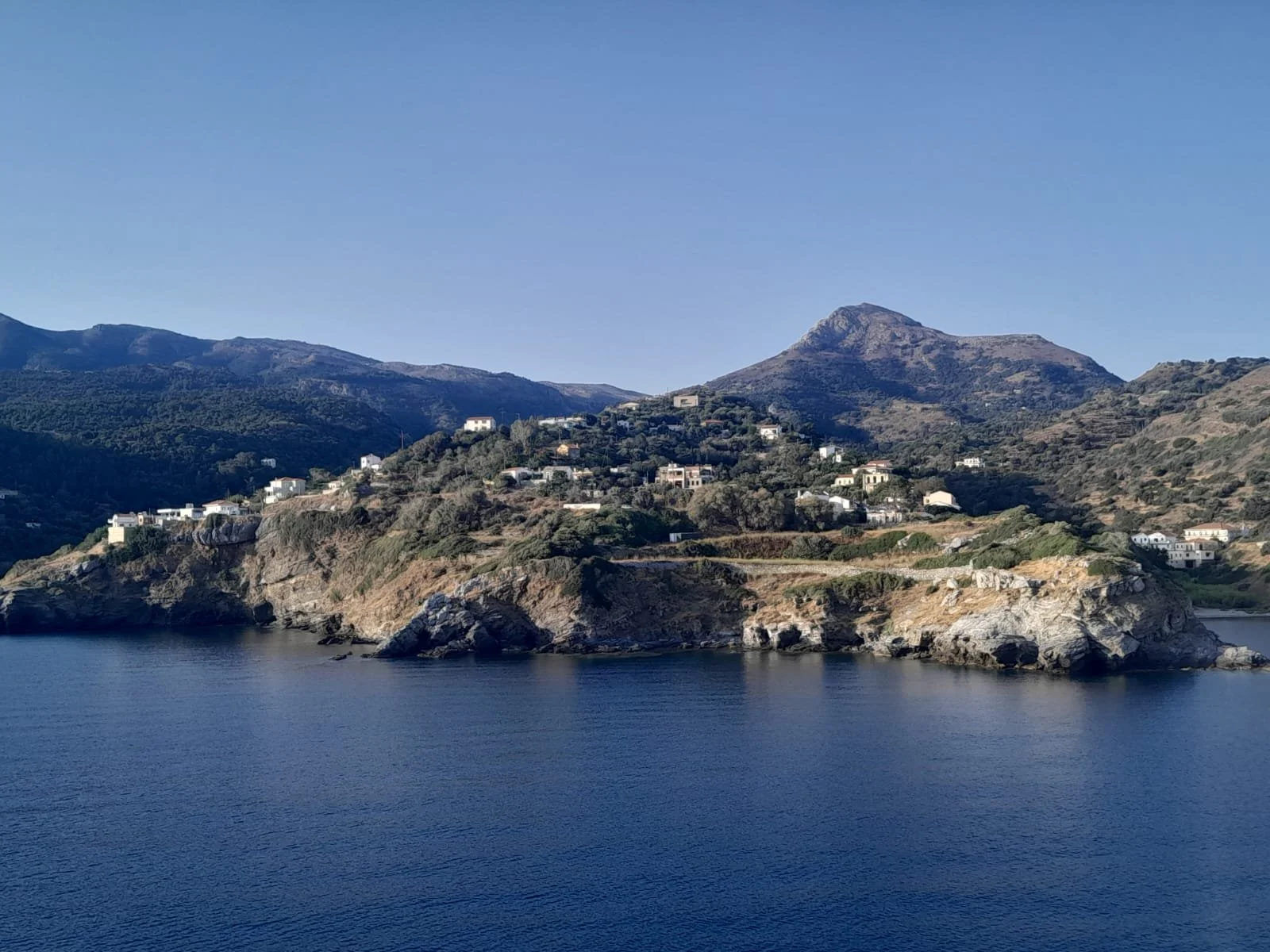
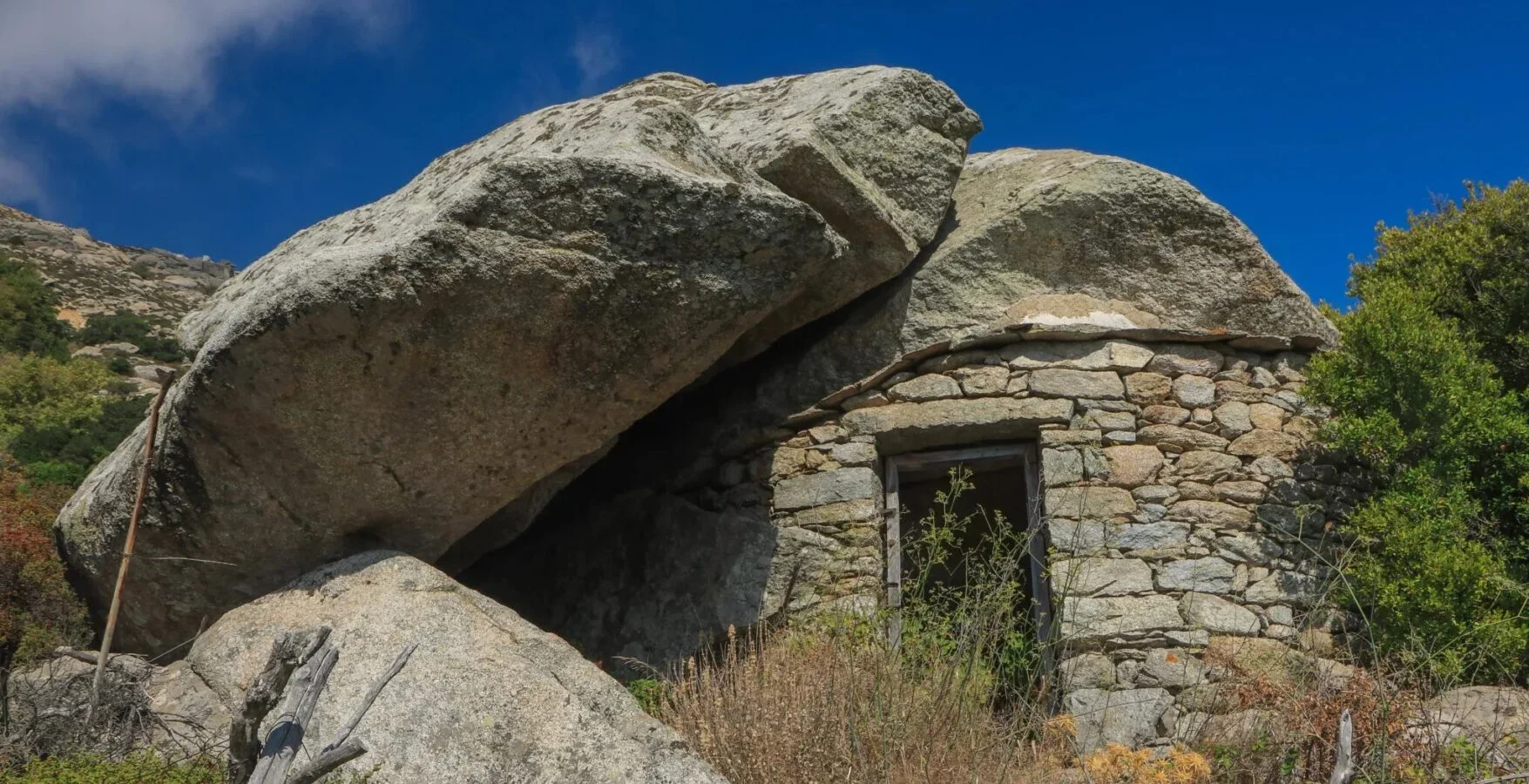
“Welcome to Greece,” the Turkish mobile signal kept reminding me every day on Ikaria, a North Aegean island just across from Bodrum, Kuşadası, and Izmir on what is now a Turkish coast. The first time I visited the island was in late spring of 2021; I had been slightly less heartbroken than this time. Four years later, it was the end of August, and summer was still aflame with its infinite strength. Ikaria is an island of mind-boggling stories: according to the ancient Greek myth, Daedalus’ son Icarus fell near its shore after his wax wings melted while trying to reach the sun. The island’s past is deeply entangled with the history of piracy; Ikarians burned their ports and set up stone dwellings camouflaged in the landscape, known as anti-pirate houses. Following World War II, during the Greek Civil War (1946-1949), Ikaria was a place of exile for thirteen thousand communists (almost twice as many as the island's population) including well-known artists and intellectuals in Greece, such as Mikis Theodorakis and Manolis Glezos. In the last Greek parliamentary elections in 2023, the Communist Party of Greece (KKE), the oldest communist party in Europe, won 35,08% of all votes in Ikaria.
The island is also home to the naturally radioactive hot springs and is one of the world’s five so-called Blue Zones, where people live exceptionally long and healthy, often reaching over a hundred years old. Year after year, this mystery of longevity brings groups of American tourists and researchers to the island. Numerous tests are being conducted on its centenarians without providing persuasive answers on why Ikaria is on the list of what the world calls Blue Zones: is it the diet, the air, the sea, genetics, companionship or even tradition (!) that keep warding off death and dementia from its shores?
The archipelago used to be inhabited by the Pelasgians, the predecessors of the ancient Greeks. Late-night research and curiosity about them redirected me to a closer chronotope—the village of Karavostamo, a ten-minute ride from where I was staying and from where some eighty years ago modern Greeks died of hunger. Mysterious ways of late-night googling led me to a movie A Story in 14 Words by Eirini Steirou. Around midnight, immediately after watching the movie, I found the director’s e-mail and number, wrote to her and, the reader will forgive me, this story started unfolding.
Eirini, who eventually became a friend through our many phone calls and meetings, shot and edited this short film about her grandfather’s experiences during the German and Italian occupation of Ikaria (1941–1944). Like many Ikarians, he fled the island in a small boat to escape starvation (“My feet were swollen from hunger”). Nikolaos Plakas fled to Çeşme in Asia Minor and from the town named after a fountain or a spring—on a boat carrying one hundred eighty people, six of whom survived—arrived in Cyprus. He joined the first Greek Army Brigade and fought against the German troops in El Alamein, Egypt. His antiroyalist political stance landed him in military camps controlled by British and Greek royalists in Decamere, Eritrea. Plakas returned home in 1945, and one of his twenty-five grandchildren, Eirini—carrying peace in her name—made a movie from his story told during a summer afternoon, which the demon of tomorrow had already claimed, unbeknownst to her, as this was the last time she would have seen her pappou alive.
After hearing his story, I went to the village of Karavostamo and sat in the kafeneio on the main square with my Athenian flatmate. It was the morning before a concert in solidarity with Palestine should have taken place. Plates with leftovers and empty glasses from yesterday’s panigiri were swaddled in white paper tablecloths under the shimmering morning light. While my flatmate enjoyed the sound of the waves and rare birds, I began asking whether there was anyone I could speak to about the starvation of the island’s population. I took a walk through the tiny streets behind the square and there, on a veranda next to the sea, I found a family who told me they might be able to help me. Not long after, I met two elderly men who offered a drink of tsipouro and peanuts and started telling the story about their village where hunger took nearly a hundred victims.
“Those who didn’t have olives starved to death.”
“They would tell the people to try to summon all the remaining energy and approach the cemeteries to be buried there because people couldn’t carry the deceased.”
“There was a man with his family, all starved, they embarked on a small wooden boat and in the middle of the night they left from the north of Ikaria. By dawn they thought they arrived in Turkey but when they heard Greek, the man got a heart attack and they noticed they were circling around the island only to reach its southern shore.”
“This house was supposed to be burned by the Italian army, this one here, but the British army called them to combat and they didn’t do it.”
One person called another, and in half an hour, I was surrounded by women and men, all Ikariotes, ages ranging from mid-thirties to early eighties. Each had a story about the starvation during the German and Italian occupation of the island. Each one of them was a neighbor of someone who survived the disastrous era. In 1943, the Red Cross envoy described Ikaria as “the most sorrowful island.” They arrived in Agios Kirykos on the Turkish ship Ungur loaded with forty-seven tons of flour. In the above-mentioned capital of the island of approximately three thousand inhabitants, where previously thirty people had died every year, the researchers showed that during the occupation, hunger and death took thirty people per month. Per their reports, of the 804 officially recorded deaths, almost half were caused by lack of food. The conversation with the Ikarians reminded me of Giorgio Agamben’s acumen, perceiving starvation as a phenomenon exposing the “bare life”—humans reduced to biological existence under sovereign power. He interprets famine and deprivation as the purest form of political domination: the stripping of political rights until only survival remains.
The luck of that afternoon led me to a wonderful writer from Ikaria, Stratis Galanos, whose novels weave historical threads lived by the Ikariotes. Not long after our conversations, I came across a name—Katie Fragou-Zikidi. On the first Sunday of November, with the sun trying to imitate its late summer glory, she invited Eirini and me to visit her in the Athenian suburb of Alimos. Immediately upon entering her house surrounded by a garden of olive, loquat, and plum trees, she asked us to write down our names and numbers in an old phone book. In return, I asked her to tell us her astounding story, described in her book Το ταξίδι προσφυγιάς 1942-1945, The journey of refuge 1942-1945. She was a nine-months-old child when her father left Fles in Ikaria for Chicago to work as a house and construction painter. She would see him only once again, as an adult, before his return to Chicago where a work accident sent him to rest at the Elysian Fields. When, as a child, she learned the alphabet, the only thing she kept writing was Σ' αγαπώ μπαμπά. I love you, dad.
Katie was a twelve-year-old girl who had eaten only leafy greens since the Germans and soon thereafter Italians occupied her village. Her mother spent the last of the money her husband sent from Chicago to buy flour, sugar, and coffee. Once she shared it with the neighbors and her family, Katie’s mother took her daughter and, accompanied by thirty-one starving passengers, fled Ikaria by boat. After thirteen days they reached Çeşme in Turkey, just like Eirini’s grandfather.
Çeşme is a town in Asia Minor, one of the scenes of the infamous Greek-Turkish population exchange. Twenty years later, in 1942, it was a place where Turks helped Greek refugees, as history often shows. Besides being sheltered in their houses for almost a year, Katie remembers the moment when she saw rice pudding in a pastry shop in the town square and her mother, aware that her only child hadn’t eaten for days, decided to pay for it with her wedding ring. A Turk from Crete who witnessed the scene, once a refugee himself, asked the shop owner to return the mother's ring and paid for the child’s desire.
When asked, Katie will quickly say that being a refugee today is the same: it is pure luck of survival. Her mother’s nursing degree had opened the way for them to leave Turkey for the Lebanese town of Tripoli, and finally to Oyoun Musa in the Sinai Peninsula, not far from El Shatt, a camp for Yugoslav refugees from Dalmatia. The chance to train teenage girls as nurses had spurred Katie’s mother to convince the head doctor to allow her thirteen-year-old daughter to join the program in order to become a nursery worker. Despite her young age, Katie began working alongside her mother. Feeding starving children who could barely swallow, tending to infections and epidemics, wounded soldiers, and witnessing widespread poverty and famine made her, in her words, “become an adult way too fast” and understand what solidarity meant. Inspired by the hardship in her stories and the glimmer in her watercolor-painted eyes, Eirini asked if she believed in God. The answer came, succinct and unambiguous: “I understand the solace and ease people may find in believing in God, but we hung God a long time ago.” With a subtle shrug, she added that being a leftist simply meant helping those who did not have enough, as much as being a believer never included any ties to the church precisely because they were the ones who equated communists with the devil.
Passing through Jaffa and Tel Aviv in 1943, Katie reached the Nuseirat camp in Gaza where, among British and Greek doctors and nurses, she stayed in a tent with her mother till the end of the war. In Gaza, she came to understand what it means to be human at the edge of endurance: she helped deliver a sixteen-year-old girl’s baby, witnessed patients stealing bread from one another, saw bedsheets and blankets disappear from the camp, witnessed a suicide attempt using medication, gave her own blood to save her thirty-three-year-old aunt whom she would later bury in the Orthodox cemetery in Gaza, took part in a wedding in the refugee camp. Both nurses, Katie and her mother developed a close friendship with a Palestinian family whose youngest daughter Leyla was supposed to leave Nuseirat and join them in Greece. Katie’s wish to have a sister for life did not come true because Leyla didn’t manage to get all the documents in time. Mesmerizing are her memoirs about traveling through Palestine: Jericho, Jaffa, Jerusalem, the Dead Sea: open roads filled with the smell of blossoming gazanias and oranges.
All this took place in the middle of the Gaza Strip in 1944, a place where today all the hospitals have been destroyed and razed, and where there are still doctors and nurses, fathers, mothers and children, bakers and journalists, poets—if the Israeli army hasn’t killed them off already during their working hours or while trying to preserve from oblivion the horrors of that time. The Nuseirat camp became a refugee camp for Palestinians inside their land following the Nakba in 1948. Katie was ninety-seven when she told us the story in her kitchen in Athens as she prepared an Ikarian dish soufikò. Her kitchen opens onto a long L-shaped balcony, from which she watches the Aegean Sea and the island of Aegina and thinks of Palestine and the horrors of genocide committed against its people, which began shortly after she had left.
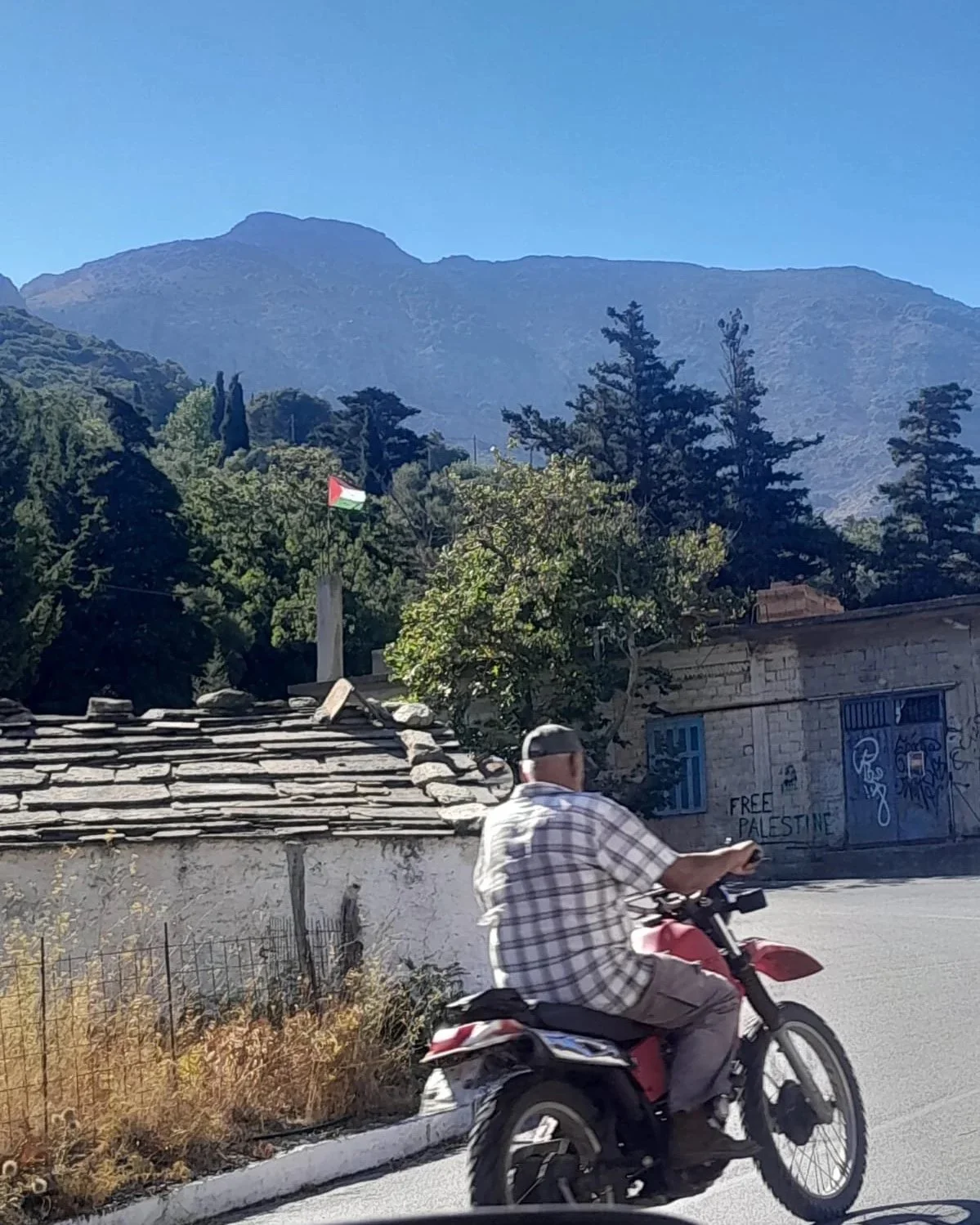
I left Katie’s house with the sense that history had once again crossed another sea. Her words reached me the way language does when it is about to disappear. Not as an archive or testimony, but as an echo—something already loosening its grip on meaning. In Ikaria, that echo would find its voice again. After a nine-hour overnight journey from Athens in August, the ferry’s red tongue reached Evdilos. The morning light illuminated the messages in the port: “Supporters of genocide are not welcome in Ikaria; Solidarity with the people of Palestine; Freedom for Palestine from the river to the sea” in Greek, English, and Hebrew. On my way to a nearby kafeneio, I saw a poster announcing a concert in Karavostamo by the island’s musicians in solidarity with the Palestinians. A friend picked me up and drove to Kampos, a village on the northern shore of the island, our room next to the main square with a flaunting Palestinian flag and a reminder: “Holocaust is now in Palestine.” In Ikaria there wasn’t a square, a corner, a wall, a beach that would make anyone doubt the island’s consternation and its unwavering solidarity.
Almost unintentionally, when we visited the Italian director’s house from the beginning of this story, Marwan was wearing a dark blue t-shirt saying Eleutheri Politeia Ikarias, Free State of Ikaria, a birthday present I’d brought him from the island a few days earlier. Ikarians had been under Ottoman rule for three centuries when they expelled the Ottoman garrison and achieved independence. In the middle of the summer, on July 18, 1912, Free State of Ikaria was proclaimed, together with the nearby liberated islands Fournoi. Despite the food shortages and the harsh conditions faced by the newly minted state, Ikaria remained independent for five months with its own government, coat of arms, armed forces, a flag, postage stamps, and an anthem.
In a magnificent book Echolalias: On the Forgetting of Language I read during my stay in Ikaria, the chapter “Poets in Paradise” features prominent figures from the medieval Arabic world. The Syrian poet Abu al-Ma'ari replies to his critic Ibn al-Qarih with the Epistle of Forgiveness, a vision of Ibn al-Qarih’s afterlife journey through Paradise and Hell. There, he discovers that the saved poets have forgotten their own works, embracing this amnesia as part of their blessed state—a vision of language where memory and oblivion become one, freeing speech from its past. If Westerners today think of Ikaria as a Blue Zone because of its extraordinary number of centenarians and absence of dementia cases, may that blue T-shirt in Berlin serve as a reminder for anyone with a question similar to the one of the Italian director on the evening of the 4th of September, oblivious of the occupations that already took place and are trying to be omitted: that the Ikarians might live as long as to have enough time for their stories to be heard and to make sure that there are enough ears to hear and enshrine why an occupation of an island or a land is—to say the least—an abominable idea.