Across the River
Magdalena Crăciun
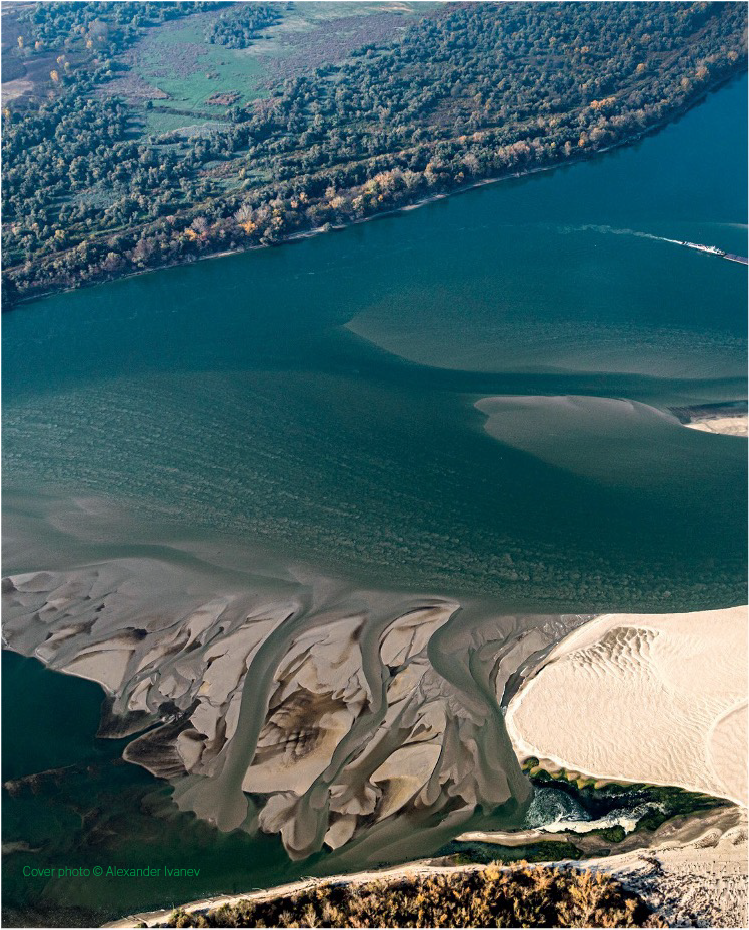
Photo: Alexander Ivanev
I froze. I saw my brother looking at me from the sidewalk, stunned. My mother came, running, her face white. I grabbed her skirt, pulling myself into her body.

That year, 1987, I was ten years old. My mum decided that I was old enough to travel with her and my older brother by boat across the Danube to neighbouring Bulgaria. That three-day journey to a foreign country was overshadowed by what befell me toward its end in Nikopol. I relived its wonder through the notes I wrote in my diary and the stories I told to neighbours and classmates but kept that part of the journey to myself.
Turnu Măgurele
The journey began one day in May before dawn, when the town still slept beneath a veil of malodorous mist.
My father, an accountant employed at the synthetic fertilizer plant, had to be at work at seven in the morning. He drove us in the dim half-light toward the border crossing on the riverbank, a few kilometres away from our home in Turnu Măgurele, a town bordering Bulgaria. The road wound down to the river between fields silvered with dew.
The small boat was scheduled for nine o’clock, but my parents knew that timetables were seldom kept. The three of us arrived early and waited. My brother and I explored the riverbank while mum sat on the stairs of the building.
Three days earlier, she had received a phone call from the police station: the long-awaited special permit to cross the border was finally ready. Like many residents of this border region, she was elated by the chance to travel, even if for a few days and only fifty kilometres inside another communist country. To us, Bulgarian shops overflowed with goods we could only dream of seeing on the shelves. She moved quickly, confident she could arrange everything in time.
Money was at the top of her to-do list. In those days, every river crossing was a small gamble. Money had to change shape, first into the Bulgarian lev that holders of valid permits could get from the central state bank, then into foreign currencies bought on the black market, then into goods that might sell in Bulgaria. My mum, a schoolteacher, had her connections in the Roma community. Names were rarely mentioned, but I had my suspicions. Most often, she turned to Maria, a woman her age, a childhood acquaintance. They would occasionally meet when schoolteachers went to the Roma neighbourhood and visited their pupils. They must have shared, it later occurred to me, their know-how of navigating scarcity.
On that occasion though, mum’s efforts bore little fruit. We had only a handful of Bulgarian lev and German marks, too few for comfort, but enough not to abandon the plan. Worry hovered over our home like an unwelcome guest, yet it did not settle. Our cupboard held kitchenware, glass tumblers, water jugs, enamel bowls, teapots, pie dishes, each piece a promise of trade. The stock was amassed in time; my parents always scanned the shelves of shops for anything the Bulgarians might like.
Two days before the journey, their web of favours was reawakened, and before long, a pile of under-the-counter pink, orange and ivory nylon nightgowns poured in. A victory!
The nightgowns felt soft, rustling and faintly luminous in the dim light of our flat that evening. These gowns were known to be highly appreciated across the river.
Then came the question of where we would sleep. Hotels were out of the question, too expensive, too official, too visible. My parents whispered, weighing the possibilities. For Nikopol, our first stop, they pinned their hopes on a “Romanian from Vidin” and his wife: a dependable couple, he fluent in Romanian, both reputedly kind. We would go to the train station in the afternoon and look for them. If they wouldn’t be there, my mum was sure she would find someone else. There were always Bulgarians around the train station who would take in Romanians for a few coins or gifts, she said. The worst-case scenario, she sighed, was to knock on the elderly couple’s door and hope they still remembered her.
Packing took a few good hours. We would carry one bag each, small enough for customs officers to miss. Dad was patient and meticulous, in his element. We watched him laying out the goods on the kitchen floor and wrapping them in old newspapers. The presents meant to smoothen our way he wrapped in coloured paper. Our travel kits, a toothbrush, a bar of soap, a small towel, one T-shirt, two pairs of socks and two knickers all fit neatly.
But there was no room left for the nightgowns. We would have to wear them under our clothes. The thought made us laugh. It was spring, and the air already mild. Yet beneath the laughter lay the unspoken truth that we might have to sleep anywhere, even under the open sky. So, we had to add one more layer, just in case the night turned cold.
I could hardly sleep that night. I felt excitement and fear, bound together with newspaper and a piece of string.
The Crossing
People began to queue. During the two hours we lingered around the port, peering through the fence, inspecting the machinery, or looking over the river to the town on the opposite bank, the crowd kept growing. We arrived early and felt certain we would make it to the small boat, even if the well-connected latecomers tried to skip the line. Our confidence began to fade as the line started stretching along the quay.
The door of the customs office finally opened around nine o’clock and we were let in, mum holding my hand tightly. The sun was up and shinning. The three of us were anxious to cross on the other side and were flushed and sticky beneath our six nylon nightgowns. I was hungry, but mum would not let me touch the sandwich or the apple in my pocket. I might get sick on the boat. We recognised one of the officers, a distant relative of my father. I felt my mother’s hand relax a little. He checked the permit and our IDs, then sent us towards the quay to wait.
Twenty of us boarded the boat that morning. The crossing took about half an hour, although it felt much longer. I liked the wind and drops of water on my face, but I was also afraid. My brother made me laugh, whispering that he looked better in the nightgowns than most women on the boat and daring me to guess what others hid beneath their jackets or carried in their bags. Mum promised that were about to taste the best pastry in the world. We disembarked at Nikopol.
Nikopol
An officer speaking in broken Romanian told us to enter the building one by one, or in families, otherwise it would become too hot inside. Little did he know about all the nightgown layers. We ate our sandwiches while waiting. Apples should be kept for later, mum advised, but she ate hers. That contradiction made us laugh, but we had to swallow our laughter and pull serious faces in front of the officers. Our papers were checked. They were in order. Our presents were opened. They were fine.
At last, we stood on Bulgarian soil. We entered a block of flats near the customs building and slipped out of our nightgowns. We headed toward the pastry shop next. Mum was right. Small bread rolls topped with melted yellow cheese were divine, and the yoghurt was smoother than I ever could have imagined.
With our stomachs full and hearts delighted, we wandered through the lower part of the small town. Across the river, the chemical plant shimmered beside the port, a steady, reassuring landmark, as if home was watching us from afar. Mum led us deftly, steering clear of other Romanians peddling their wares, yet careful not to wander off into empty streets she did not know.
She stopped women on the sidewalks, drawing from our bags small treasures to show them, from ivory nightgowns to pinkish glassware that caught the light. She knew her numbers in Bulgarian and, when her words failed, she resorted to the scraps of Russian she remembered, her hands fluttering in midair to describe quality and price. If anyone pushed too hard to bargain, she ended the exchange at once. A third of her asking price was fair; less than that was an offence.
We returned twice to the park near the customs building to drink from the public fountain and use the toilets. The town seemed brighter than ours, with houses with brick walls and long gardens. Every time a cat crossed our path, I lagged behind to pet it. Mum grew impatient. The glassware weighted on her shoulders, and she reminded us that our task was to get rid of it before evening.
Half of the wares were still unsold. She went into a shop and returned with bread, cheese, yoghurt, and rose jam. We ate in the park, cross-legged on the grass. I devoured everything, down to the last crumb; that day, food seemed to taste of sunlight. Other Romanians rested nearby. I spotted a girl I knew from school, and we traded a slice of bread with rose jam for a piece of chocolate softened in the heat. My brother wanted to climb one of the hills above the riverbank so we could see the Danube and our town beyond it. Mum said we might do that later, before returning home. But she looked worried. Our bags were still heavy. Too many Romanians had crossed that morning. Finding a host would not be easy, she feared.
When we reached the train station, it was deserted. Even my talkative brother fell silent. The gloomy thought of sleeping on the benches, like they did on a previous journey, pressed on all of us. Mum told us to wait and went searching. She was gone so long that I stopped playing with a stray dog and sat quietly beside my brother. When she finally reappeared, she was smiling. “We’re in luck,” she said. “I found Gheorghi and his wife, Rayna. They’ll take us in for the night.” The Romanian from Vidin!
After securing our lodgings, we spent the rest of the afternoon trying to sell our merchandise. The streets were drowsy now, the air thick with dust and the unseasonal heat. The few women we stopped offered next to nothing for our glassware and enamelware. Mum brought us more pastry and bottles of boza, and we ate in silence on a bench beneath the shade of a tree. I drank boza for the first time in my life and loved it! I made both of them laugh by trying to squeeze the last drops from all three bottles.
Gheorghi and Rayna’s flat did not look much different than ours, just smaller. It had similar furniture and even a beige rotary dial phone like ours. The bathroom had no tub, no washing machine, just a blue plastic bucket for washing up. We sat in the kitchen and ate the bread and jam that Rayna offered us. Mum gave them an extra gift, a set of twelve small green glass tumblers—my favourites—in exchange for sandwiches and apples for the next day’s trip. The couch in the living room was already made up for us, the sheets pulled tight and smelling faintly of soap. I went to bed soon after brushing my teeth. Mum stayed up; she first had to go to a neighbour’s house to exchange her twenty marks into leva.
We woke before dawn. Rayna prepared us breakfast: fresh bread, white cheese, fig jam, and camomile tea. The scent of food filled the little flat, sweet and warm. We ate in silence, each bite a comfort, thanked our hosts and left to catch the six o’clock bus to Pleven.
The bus station was only a short walk from their home, and Gheorghi accompanied us there. Before we parted, he pressed a small doll into my hands, a gift that felt enormous.
Pleven
I woke to the bustle of the Pleven station. Mum was already at work, studying the timetable for the next day’s return to Nikopol. She bought our tickets for 12:30. The vendor struggled to hear her through the din, so she pulled a scrap of paper from her purse and wrote “Pleven-Nikopol” and sketched three tiny figures.
Mum decided to eat our sandwiches there and then. She bought us a little bottle of boza from a nearby kiosk, and I played the same game, squeezing out the final sweet drops from all bottles. After refilling the empty water bottles and using the toilet, we set off toward the town market. We wandered the narrow winding streets, past blocks of flats, some quite tall.
When we finally reached the market, my brother and I took up our small duty—watching for policemen, who, mum had heard, were less forgiving here. She walked with resolve, stopping the passersby, even the men, asking whether their wives or daughters might like a beautiful nightgown or a sturdy pie dish. Hunger tugged at us. After four hours, held together by her determination, she sold everything, often at a very good price. We also learned that the previous night she managed to get a good exchange rate for the marks. I remember the lightness that fell over us, the way relief softened her face. We rested on a bench and let the morning’s tension drain from our limbs. Later, in a small restaurant near the town centre, we ate a three-course meal: cool tarator soup, warm gyuvech, and soft pitka, one more delicious than the other.
The city centre was beautiful. The pedestrian streets were wide and clean, paved with pale stones and lined with trees that filtered the sunlight. We wandered between two broad squares, a church whose bells made the air tremble, and a monument of stern-faced soldiers. We slipped in and out of small shops, buying sweets and packets of coffee to take home. Ice cream melted down our fingers as we sat beneath bright umbrellas. What enchanted me most were the fountains and their cascading waters, catching the sunlight in quick sparks. I had never seen anything so gorgeous. I stood rooted before them, watching the endless movement of water. I splashed at it and played with children whom I could not understand. I played and played; I could not stop. It was the most extraordinary time. I wished it would last forever.
We headed toward the walk-in clinic in the train station. When we arrived, Jenia, a thin, tired woman, was already there for the evening shift. Our luck had not run out yet. The nurse offered us a place to sleep, a tiny room at the back of the clinic, with a single small window. She also pointed meaningfully at her wristwatch while she talked. Mum gathered that we could come in at ten o’clock in the evening but would have to leave by dawn. She suspected the nurse feared her colleagues. We accepted, grateful for any roof at all.
Since we had hours to fill, we returned to the city centre. At night, it was a different kind of marvel: strung with lights andfilled with soft voices. Adults sat on benches, children ran between trees holding glowing balloons. We ate banitsa and ayran from the only pastry shop still open. I swore I could eat an entire tray!
Later, in the clinic, mum and my brother pushed the small children’s beds together like puzzle pieces so the three of us could lie down. I slept pressed between them, smelling disinfectant and sweat. Mum worried about waking up on time, but worry was a fine alarm clock. Before dawn, she shook us awake. We dressed quickly, washed our faces, barely combed our hair, put on our jackets and beanies, pulling them tight like armour. Jenia found us ready to leave. Mum paid her. We said our goodbyes and headed slowly toward the city centre.
The shopping centre in Pleven dazzled me, and I wandered wide-eyed through the aisles. In the shoe department, the assistants eyed us with suspicion. We bought wonderful shoes and used the boxes to hide our old old ones and left them on the shelves. I found pink leather trainers, the most beautiful shoes I had ever seen. I might as well have been walking on clouds. Mum found her treasure trove among the fabric aisles. She left with fine wool cloth for skirts. In the sports department, my brother found a black bomber jacket with mladezh, meaning youth, written in white capital letters on the back. We left with bath and kitchen towels, tablecloths, bars of soap, bottles of shampoo, tiny rose perfumes. Small luxuries we touched reverently.
Three hours later, we were on the bus to Nikopol, happy.
Back to Nikopol
In Nikopol, the mood shifted. We rearranged our bags in the park near the customs. There was the familiar tension in mum’s hands as she tried to hide things to avoid questioning by the customs officers. My brother sprinkled dirt onto the new towels so they looked used. We had to eat a large box of puffcorn so it could be filled with coffee. Bars of soap went into our pockets and small perfume bottles were tucked in mum’s purse.
And then came my moment of foolishness. The kiosk full of candy, my reckless dash across the road, the screech of brakes. Emerging from around the corner, a car stopped an inch away from my feet. People shouted. I couldn’t understand them. Mum screamed. I burst into tears. I kept crying until my chest hurt. To calm me down, mum bought me chocolate mints.
On the crowded boat that took us to our side of the river, my brother leaned towards mum and whispered “How would we have carried her body back home?” She didn’t answer. I saw her tears. She only held me tighter. I looked around, taking in the people and the bags. Across the water, the lights of the Bulgarian shore blurred into trembling streaks. I froze, again.
The next day, I told my parents I did not want to speak of what had happened, and that I would not cross the river again. I felt their relief. Only later did I understand, from my mum, that it was a practical relief. In a small town like ours, people knew one another and exchanged stories about their neighbours. This one might have named them careless parents and, therefore, potential troublemakers in the eyes of the authorities. They feared their permits would not be renewed.
I kept my word. They went on travelling to Bulgaria; I stayed behind. I did not cross the river again until adulthood. They kept their word, too. We never spoke of it aloud. But the fear stayed. I could have died there, in Nikopol. I could have become, my brother’s voice still says it, a body ferried back across the river and the border, no doubt with effort.
To this day, my mum tells me to watch where I am, to look around me. And deep within me, I carry the terror of those moments. A small, cold weight lodged in the body. I have held it there, contained, neither mastered nor erased. It rises only rarely, most often when I cross a state border.
Storymap
〰️
Storymap 〰️