Growing Pains
Iva Jelušić
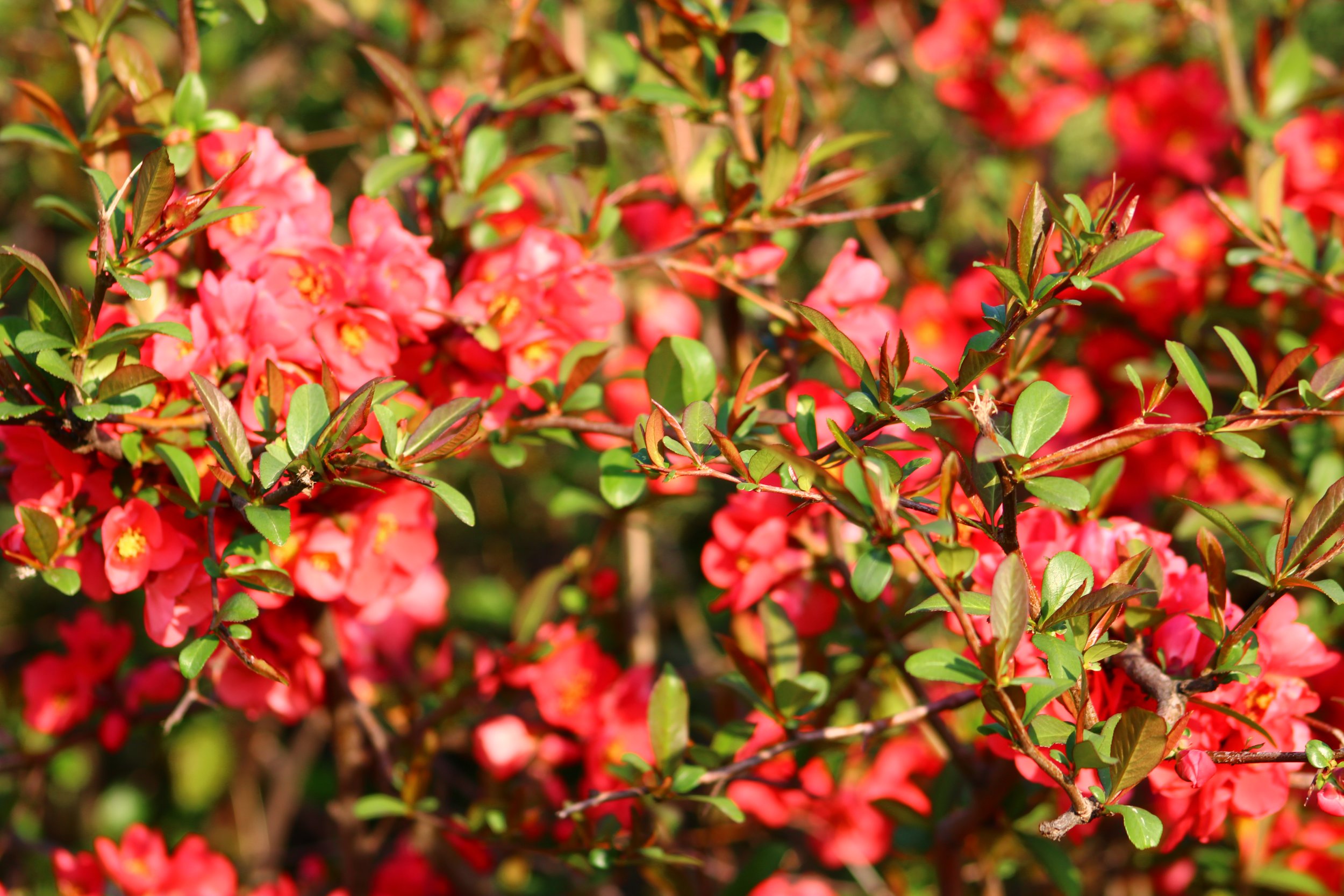
Photo: Abdulkadir Arslan
Today my dad is looking after me. Mum is at the hospital with my little brother. Usually, I go with them and wait in corridors with silent TVs and an empty aquarium. Being home like this feels new. Looking after me amounts to not much more than my dad sitting with a couple of his friends in the same room while I hover around. Four or five, I am big enough to hover if I feel like it, and I like to exercise that privilege. We are in our living room in our small town on the northern Adriatic. The room is crowded with heavy furniture and wall-to-wall carpeting, everything in shades of brown, just as the 1980s demand. They talk. They probably smoke, maybe drink. The TV is on although no one is watching. But I am acutely aware of a young woman in dizzyingly high heels and lingerie—white, pretty—strolling by a pool while the wind ruffles her hair.
Where was she going, so undressed? I couldn’t tell but wanted to find out. At the same time, I applied myself diligently to not finding out. No one present reacted to the possibility of me glancing at the content I knew I shouldn't be watching. Until mum appeared, out of nowhere, as usual. She had no words of rebuke for anyone but me. And, although serious transgressions were usually corrected by application of a cooking spoon across my behind, this time I got slapped. It didn’t even matter that I tried not to look at that beautiful scantily dressed woman. I was not really old enough to verbalize spite; I just felt that had I known I’d be punished, I would have watched.
But, first things first. In the beginning, there was a cooking spoon. When writing about the matter of the cooking spoon and its application across a kid’s behind, I think of spanking. It seems to me that the cooking spoon's primary purpose was spanking naughty kids, followed maybe by cooking. Spanking, however, was flexible. It could include a cooking spoon or something else, like a hand. Very ad hoc tool for a parent to use. Very mild. Inconsequential, except when used on the face. That stung, and it meant that parental anger had exceeded its usual level, with a high probability of tiresomely long conversations and other reprimands to follow.
A much more consequential spanking tool, at least in our household, was a bush we called Japanese rose growing in the garden. Its elegant, thin branches stung when applied. They were among my mum’s favorites. They were still better, I thought then, than weeping willow used by some other children’s parents further down the street. Its branches left bruises.
In the 1980s and 1990s, this way of disciplining was a normal part of raising children on my street. I don’t know if the situation was different on other streets. But I grew up convinced that every kid experienced something like this. Some days you fall, while running, biking, or climbing, and scrape your palms and knees. Some days you crawl through a thicket and get scratched by thorns. Some days, maybe even those same days, you return home filthy with your clothes torn, and your parent punishes you. Some days you return late, and your parent punishes you. Some days you don’t finish your chores, and your parent punishes you. Natural order of things; if P then Q. Not a big deal.
The bigger deal, at least for me, were the rules that came with punishment. Especially the ones no one bothered to explain. If my childhood had a shape, it'd be the floor. A group of girls sitting on the floor of a bedroom, a living room, a terrace, a balcony, usually surrounded by Barbies and their ecosystem. There’s a Barbie house or a Barbie van, maybe a car and a horse, as well as clothes, shoes, handbags, and other objects that clearly do not belong to Barbie World but have been added to it anyway. The floor is a landscape. Many days collapse into one: Barbie mess and secrets and negotiations about whose doll wears which clothes, drives the car, has a Ken (they were a rarity, something like Skippers, but a little more exciting). And although the rule says that girls don’t sit on the floor, the toys live there, and so do we.
We often sit on pillows or blankets. It’s for comfort as well as a precaution. “Girls, watch your ovaries, you'll need them,” an aunt raises her voice. “You'll get a cystitis,” a neighbor throws in her two cents. “Watch how you sit,” grandma frowns. Padding was a practical response to the repeated warnings that sitting on the floor causes cystitis, ovarian inflammation, and, somehow, indecency. Pillows and blankets serve as a barrier between us and the ailments. No one explains when sitting on the floor causes which condition, or why the beach—a kind of floor—is exempt. Nor does anyone explain why this is a problem for girls. But we do not ask.
Although parents were persistent, if annoying, in repeating the formulas about the perils of sitting on the floor, this was not a hard and fast rule. Not in a sense that it would get a child punished. At least on my street. A child would, however, remember. When I now see people sitting on floors, sidewalks, or stairs, I feel like they are violating a rule of etiquette. I myself avoid sitting anywhere that does not include a chair, couch, even dressers and kitchen counters when I am particularly relaxed. I am very aware of what I am doing if I put my butt anywhere near the floor, not to mention directly on it. I’m relieved when I move it.
Fast forward to the second half of the 1990s. I am now a teen, and parents exercise physical punishment less and less. But it still occurs from time to time, mostly when, trying to figure out who we are among our peers, we lean into parental imaginations of what we should be.
I’m fourteen when my mother comes to pick me up from school, angry as a fury. I can hardly believe it, but I know. Someone told her that they saw me kissing a boy. She starts the argument immediately, before we even exit the school driveway. At some point, I stop talking. Encasing myself in silence is my preferred way of navigating her anger. I don’t feel that I can change her opinions, her attitudes, or the anger that sometimes emanates from her. Frustrated, she slaps me, but only once we reach home. I regard this as much better than a public punishment. I wish I could say the slap is a surprise. I know about many things that are not appropriate for girls my age. More importantly, even when I don’t know, I have a keen inner compass that lets me know, oh so loudly and clearly, whether an activity is appropriate or not.
In my mind, I didn’t want to give a damn about the rules of etiquette. I wanted to sit on the floors along with the carefree of the world. I wanted to, pardon my French, take a piss on any and all types of control. But it wasn’t possible. My body has become the means of control. It knew the rules even if I didn’t want anything to do with them. Fortunately, I was also stubborn and curious. I liked to try things as much as possible. At least as much as an introvert with a penchant for rules can. So I did. And I liked not getting caught, mostly because the adults explained the subset of rules of etiquette that intertwined with decency and properness, and the quantity of those only grew with time, with assorted punishments based on denying things and activities. Slowly, I learned when and how kissing boys stopped being an offence in parents’ book (much later than I would have expected). Or when and how smoking stopped being an issue for them (never. Even if they try, and they do). Although I wouldn’t change my experiences that came from all of this, I sometimes think about how differently things might have felt if the rules had lived in words instead of in bodies. Probably not nearly as dramatic.
Today, I am more or less grown up. More, if you ask me. Less, if you ask my mum. Not at all until the kids come, my dad would probably add. There is a whole family philosophy in that sentence.
By now, I have named things, sorted them, connected them into tidy sequences of cause and effect. Everything makes sense even though no one ever explained how Japanese roses, slaps, and silence came to stand in for words, and how decency, discipline, and femininity became interchangeable categories. I am a little proud of how far I’ve come. And a little smug about how well I’ve understood it all.
In my more-or-less adulthood, I sometimes have coffee with my mum, often by the sea. We talk quite a bit now. To my surprise, I am not sure that words lead to a better understanding. That’s why I don’t ask if that lingerie was indeed pretty or if it was just my imagination. And I don’t mention that I didn’t really like that boy and that I sometimes still wonder how it would feel not to have wasted the first kiss. Some things, I have also learned, are not meant to be clarified, only remembered. Silence can be kind.